Introduction:
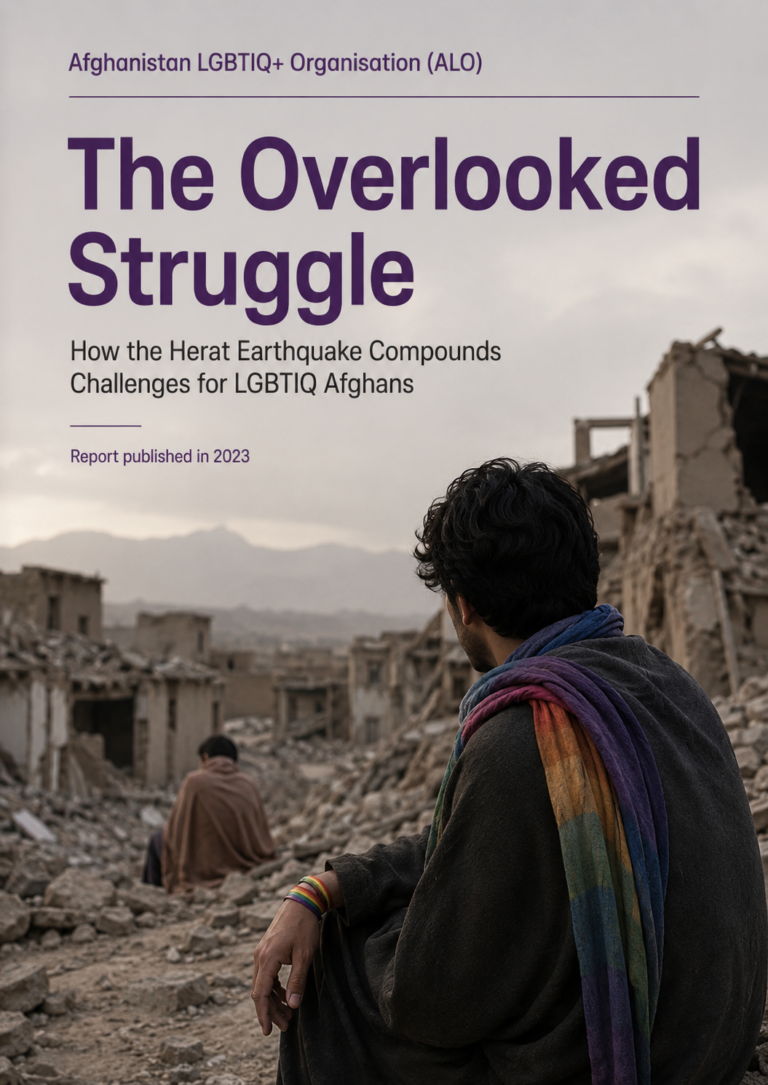
The earthquake that struck Afghanistan in October 2023 in Herat province, not only left a devastating toll in terms of lives lost and infrastructure damaged but also unveiled a layer of vulnerability and discrimination that is often overlooked—the situation of LGBTIQ individuals in a country already grappling with upheavals under the Taliban rule.
According to the UN, in the aftermath of the earthquake that claimed the lives of nearly 1300 people, 1700 people were injured, and 12000 people were affected by the earthquake in Herat. This earthquake, shed light on the unique challenges faced by LGBTIQ people in terms of accessing humanitarian aid.
Following the fall of Afghanistan by the Taliban in 2021, the situation of LGBTIQ+ people became harder than in the past due to the increasing violence and persecution based on a person’s sexual orientation, gender identity, and sex characteristics. As Afghan, LGBTIQ+ Organizations, Outright Action International, Human Rights Watch, Rainbow Railroad, and other organizations have documented, the Taliban has inflicted massive human rights violations on LGBTIQ people such as rape, detention, torture, forced disappearances, and even extrajudicial killing.
Sonia is a survivor of the earthquake in Herat Province. She identifies herself as a trans woman. “After the fall of Afghanistan, I live like a prisoner in my home. I cannot go outside because they will harass me because of my appearance. One day I was in the street to go to a shop but they stopped me and questioned me whether I was a girl or boy, then they slapped me on my face and told me to have an “Islamic” dress code” Sonia said that.
The Herat earthquake revealed the unique and extra layers of discrimination and violence that LGBTIQ+ people struggle with during and after a natural disaster like an earthquake. Before the earthquake, Sonia was living with her family, but they lost their house in the aftermath of the earthquake.
“When the earthquake happened, fortunately, my mother, sisters and I were in the yard and my father was outside of the house. Thanks to God we survived but we lost our house, so we had to sleep in the street at night. It was so cold, and we did not have warm clothes. I heard from the people that some groups give warm clothes and food to the people who were affected by the earthquake. I went there and while I was waiting in the queue, a man called me “Izak” and started shouting at me. According to that man, I am the reason for god’s wrath and the earthquake”
Izak is an offensive term that the people in Afghanistan use to offend LGBTIQ+ people. Sonia’s story, reveals the multiple layers of challenges that she experienced during the earthquake as a trans woman. She was deprived of aid because of her gender identity as a trans woman during the earthquake and she was blamed because people had seen her as a reason for the earthquake. Hamid is a 22-year-old gay man who had the same experience.
“After the earthquake, at night people prayed the Allah and asked for forgiveness because according to them, earthquakes are because of the people’s sins. Some people believe it is because of “Lavat” or homosexuality. As a religious person, I felt so guilty that maybe it is true that my acts as a gay man caused the earthquake” Hamid, told the ALO.
Lavat means Sodomy in Islam and it is one of the capital offenses in Islam that can be punished by lashing, imprisonment, and stoning. Some of the religious leaders in Islam, associate the earthquakes with homosexuality in society. Hamid was under mental pressure that people may harm him because of his sexual orientation. “I was scared that people find out that I am gay because if they understood, I could be killed by them. People always want to blame someone else for their misery and I was sure that they could kill me if they found out about my sexual orientation because many religious people think that the earthquake is because of homosexuality” Hamid said.
Fear of persecution and limited access to aid:
In the society of Afghanistan, people with diverse gender identities, sexual orientations, and sex characteristics face hostility and acute violence, the collapse of societal structures due to the earthquake can increase the risk of violence, discrimination, and exclusion. The LGBTIQ people can face challenges and discrimination in accessing humanitarian aid and equal treatment in a crisis like an earthquake. In the context of the earthquake in Herat, Sonia was prevented from accessing humanitarian aid because people saw her gender identity and gender expression as the reason for the earthquake and so-called “God’s Wrath”.
The fear of persecution often prevents LGBTIQ people from seeking help, hence, it pushes them into the shadows. This fear increases their efforts for access to vital resources such as food, warm clothes, and shelter because they cannot ask for help openly as LGBTIQ individuals.
Lack of Network of Support:
In Afghanistan where same-sex acts and any activities in SOGIES areas are taboo and forbidden, LGBTIQ organizations and civil societies cannot address the needs of LGBTIQ people directly on the ground. The lack of an organization or network on the ground specifically for LGBTIQ people, exacerbated their challenges in accessing vital resources and humanitarian aid. Therefore, LGBTIQ people resort to the help of Afghan LGBTIQ organizations in the diaspora.
From the beginning of the earthquake in Herat Province, we delivered aid to 8 LGBTIQ individuals and their families who were affected by the earthquake. But our support from LGBTIQ+ people in Herat was so limited due to the lack of enough resources, hence, we failed to address their long-term needs like psycho-social support.
Conclusion:
In the aftermath of the earthquake in Afghanistan, fear of persecution increased the invisibility of LGBTIQ+ people in Herat and therefore it increased their struggles in accessing humanitarian aid. In the religious and conservative society of Afghanistan, the breakdown of societal structures in the aftermath of a natural disaster like an earthquake, and LGBTIQ+ people were seen as one of the reasons for the event of an earthquake. As we have seen in the case of Sonia, a trans woman from Herat, She was deprived of humanitarian aid because of her gender identity and gender expression as a trans woman.
The compounding effects of the earthquake on the already marginalized LGBTIQ community in Afghanistan spotlight the urgent need for tailored support mechanisms that address their unique challenges. It calls for a concerted effort from humanitarian organizations and global communities to ensure inclusivity and equitable access to aid, irrespective of gender identity or sexual orientation.
As Afghanistan navigates the aftermath of the earthquake, it is crucial to acknowledge and prioritize the needs of every segment of society, including those who often find themselves at the fringes. Without this deliberate focus, the most vulnerable, including LGBTIQ Afghans, risk being further marginalized in times of dire need.
