
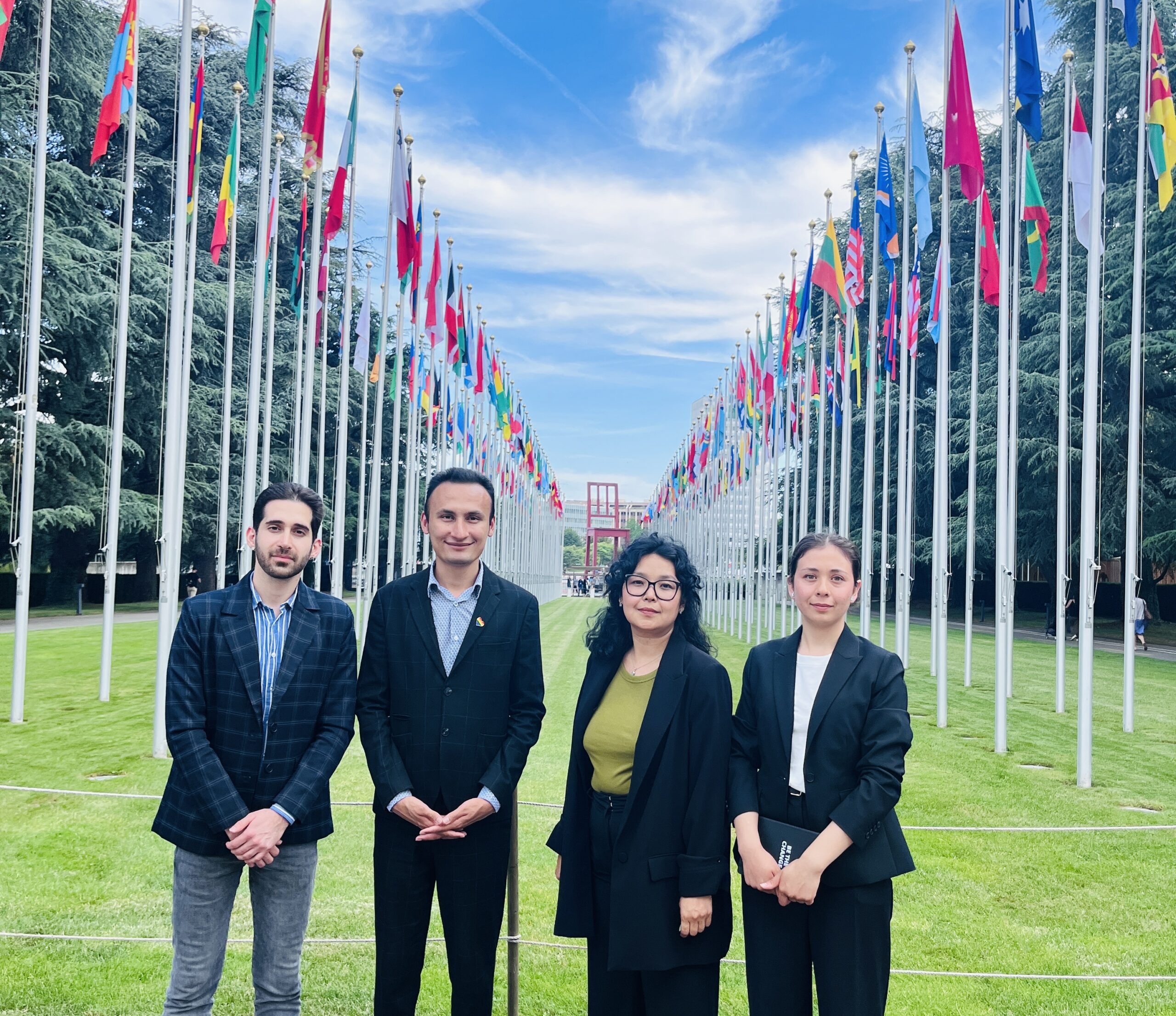
ALO at the UN Human Rights Council – HRC56
During the 56th Session of the UN Human Rights Council (HRC) in June 2024, ALO’s team — Artemis Akbary, Ali Arefi, Muzhda Samadi, and Aylar Rezaee — participated in key advocacy engagements to highlight the urgent situation of LGBTIQ+ Afghans and Afghan refugees in the region. Through official interventions, targeted meetings, and direct engagement with UN mechanisms, ALO ensured that the voices and experiences of marginalized communities were reflected in global discussions on Afghanistan.
During the session, Artemis Akbary, ALO’s Executive Director, delivered an oral statement during the Interactive Dialogue with the UN Special Rapporteur on Afghanistan, presenting updated findings on the persecution of LGBTIQ+ people under Taliban rule. His statement emphasized gender-based and SOGIESC-based violence, arbitrary detention, public punishments, and the complete absence of protection mechanisms for queer and trans Afghans. The intervention underscored the need for stronger UN scrutiny and the inclusion of LGBTIQ+ perspectives in all monitoring and reporting on Afghanistan.
In a separate intervention, Ali Arefi, ALO’s Deputy Director, addressed the Interactive Dialogue with the Special Rapporteur on the Human Rights of Migrants, focusing on the situation of Afghan refugees in Iran, Pakistan, and Turkey. He highlighted widespread abuses, including deportations, police violence, extortion, discrimination within asylum systems, and the heightened risks faced by LGBTIQ+ refugees. Ali called for urgent international action to ensure protection pathways, humane treatment, and equal access to asylum procedures for Afghan migrants in the region.
In addition to the oral statements, ALO held a bilateral meeting with the Special Rapporteur on Afghanistan, providing evidence on the persecution of LGBTIQ+ people, deteriorating conditions for women and minority communities, and the urgent need for stronger accountability mechanisms. ALO also met with the Working Group on Discrimination Against Women and Girls, where the team raised concerns about the escalating violence, forced marriage, and structural repression facing LBTIQ women and girls under Taliban rule — a group often excluded from mainstream reporting.
ALO’s participation at HRC56 reinforced the organization’s leadership as a refugee-led actor bringing accurate, community-centered information into UN processes. Through these interventions and meetings, ALO continued to advance global recognition of the severe risks facing LGBTIQ+ Afghans and pushed for stronger protection and accountability across regional and international mechanisms.


