
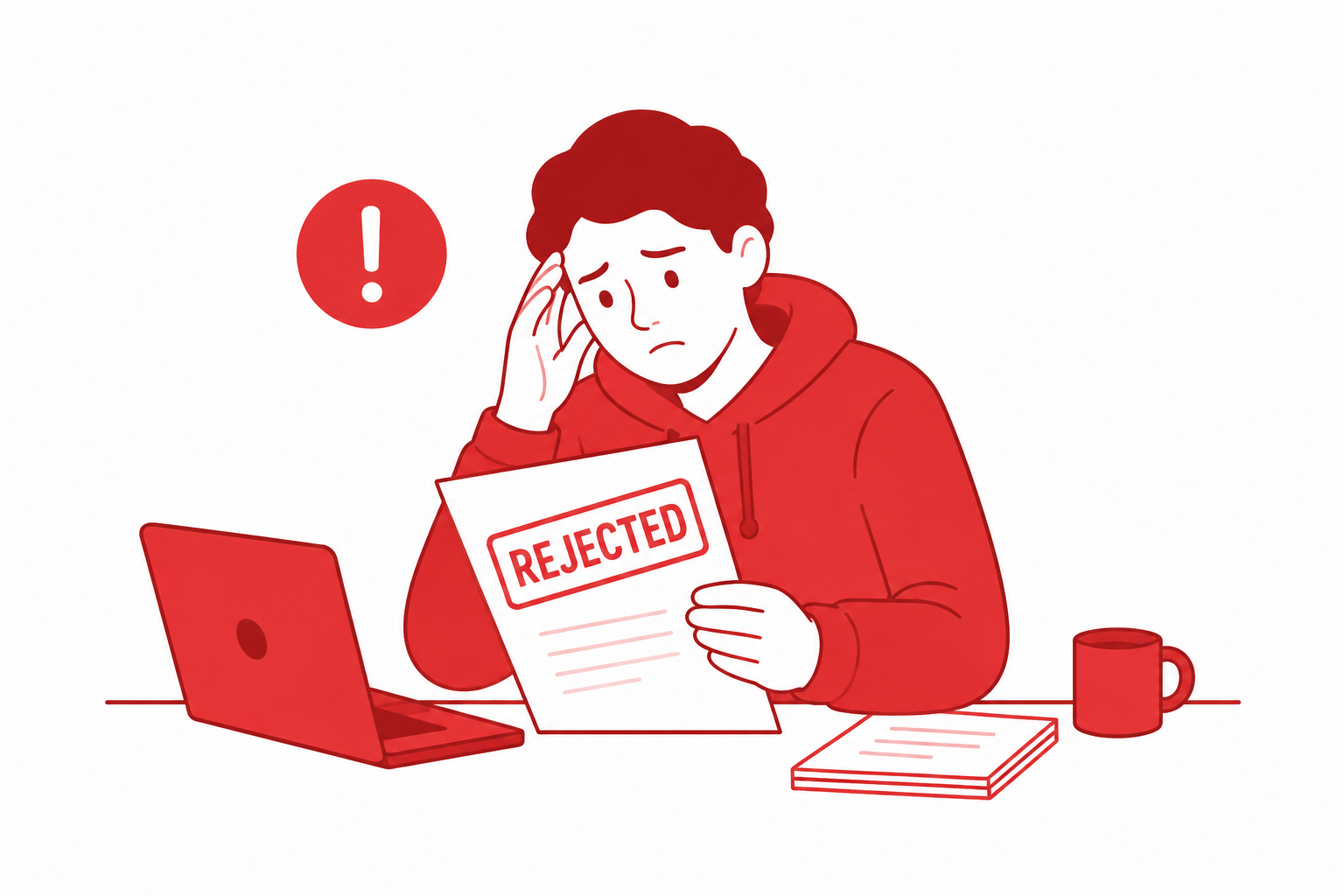
Receiving a negative decision on your application for international protection can be frightening and overwhelming.
A rejection does not always mean that your case is finished. You may be able to challenge the decision before a court, but the deadline may be very short.
Act immediately. Do not wait until you fully understand every page before contacting a lawyer.
First Step: Record When You Received the Decision
Write down the exact date and time when the decision was delivered to you.
This may be:
- The day you personally received it.
- The day you signed for it.
- The day it was delivered through an official electronic system.
- Another legally recognised delivery date.
The date written on the first page of the decision may not be the same as the date on which you received it.
The deadline for challenging the decision is usually connected to legal delivery, not simply the date on which the Ministry prepared the document.
Keep:
- The complete decision.
- The envelope.
- The delivery slip.
- Any electronic delivery confirmation.
- Any paper you were asked to sign.
- A photograph or scan of all pages.
Contact a Lawyer Immediately
Send the complete decision to a lawyer or legal aid organisation as soon as possible.
Tell them:
- When and how you received it.
- Where you are currently staying.
- Whether you are detained.
- Whether you have been given a date to leave.
- Whether you understand the decision.
- Whether you already have a lawyer.
- Whether any part of the decision contains incorrect information.
Do not assume that someone else has automatically informed your lawyer.
Do Not Rely on a General Deadline
Different types of asylum decisions can have different deadlines and legal effects.
The correct deadline should be written in the section of the decision explaining how it can be challenged. In Czech decisions, this information is often found in the instructions at the end of the document.
Ask a lawyer to check:
- The exact deadline.
- Which court is responsible.
- How the challenge must be submitted.
- Whether the challenge allows you to remain in Czechia while the court considers it.
- Whether any additional request is necessary to prevent removal.
- Whether the decision concerns the substance of your claim, admissibility, discontinuation, or responsibility of another European country.
Do not rely only on a friend’s experience. Their decision may have been legally different from yours.
The Ministry of the Interior confirms that its international-protection decisions can be challenged before the competent regional court, but the procedure depends on the type of decision.
What Is a Court Challenge?
In the Czech system, a negative decision by the Ministry of the Interior may generally be challenged through an administrative court action.
The court does not normally conduct a completely new asylum procedure. It reviews whether the Ministry’s decision was lawful and properly reasoned.
The court may consider whether the Ministry:
- Correctly understood your testimony.
- Considered all relevant evidence.
- Used reliable country-of-origin information.
- Applied the correct legal rules.
- Assessed your individual circumstances.
- Relied on stereotypes or speculation.
- Addressed interpretation problems.
- Respected procedural rights.
- Explained its conclusions sufficiently.
- Properly assessed the risk of return.
Possible outcomes depend on the case. The court may reject the challenge or cancel the Ministry’s decision and return the case for further examination.
Can You Stay in Czechia During the Court Case?
Do not assume that filing a court challenge always allows you to remain in the Czech Republic.
The legal effect can depend on:
- The type of decision.
- Whether the court action has automatic suspensive effect.
- Whether suspensive effect must be requested.
- Whether the case concerns a repeated application.
- Whether the decision concerns responsibility under the Dublin system.
- Whether another special procedure applies.
Ask your lawyer directly:
“Can I legally remain in the Czech Republic while the court considers my case?”
“Does my court action have suspensive effect?”
“Do we need to submit a separate request to stop removal?”
“Is there any date by which I may be required to leave?”
The Ministry notes that some decisions, including certain decisions on repeated applications, may not carry a delaying effect automatically.
Read the Reasons for Rejection
A negative decision should explain why the Ministry refused your application.
Common reasons may include findings that:
- The Ministry did not consider parts of the account credible.
- It believed the harm did not reach the legal level of persecution.
- It believed state protection was available.
- It believed you could live safely in another part of the country.
- It did not accept the future risk of serious harm.
- It considered another country responsible for examining the application.
- It considered an application inadmissible.
- It believed a repeated application did not contain relevant new information.
Do not become discouraged by harsh or dismissive language. Review the reasons with a lawyer and identify factual, legal, translation, and procedural problems.
Check the Decision for Mistakes
Look for:
- Incorrect names or dates.
- Events placed in the wrong order.
- Statements you did not make.
- Missing parts of your story.
- Incorrect interpretation.
- Incorrect pronouns or descriptions of your identity.
- Stereotypes about LGBTIQ+ people.
- Conclusions based on how you looked or behaved.
- Failure to consider trauma or delayed disclosure.
- Incorrect country information.
- Failure to consider evidence you submitted.
- Confusion between you and another person.
- Claims that you did not report a problem when you did.
Mark the relevant pages and send them to your lawyer.
LGBTIQ+-Specific Problems to Look For
In an LGBTIQ+ asylum case, seek legal advice when the decision suggests that:
- You do not look or behave like an LGBTIQ+ person.
- A previous marriage or children prove that you are heterosexual or cisgender.
- You should return and hide your identity.
- You did not attend Pride or LGBTIQ+ organisations.
- You disclosed your identity too late.
- You did not provide intimate proof.
- You could avoid persecution by entering a forced marriage.
- Family or community violence is only a private problem.
- Criminalising laws are irrelevant because they are not always enforced.
- You could relocate without examining whether relocation would actually be safe and reasonable.
- Trauma-related memory difficulties mean that your entire account is untrue.
- An interpreter’s insulting or inaccurate terminology is used against you.
Write down why the conclusion is wrong and discuss it with your lawyer.
Gather Supporting Information
Your lawyer may ask for additional evidence, such as:
- A detailed written statement.
- A corrected timeline.
- Medical or psychological reports.
- Evidence of threats or violence.
- Statements from trusted people.
- Letters from community organisations.
- Evidence of LGBTIQ+ community involvement.
- Country-of-origin reports.
- Evidence of interpretation problems.
- Records of privacy breaches.
- Proof of changes in your country after the interview.
- New events affecting you or your family.
Do not create evidence or ask another person to make a false statement.
New evidence should be explained carefully: what it is, where it came from, and why it was not submitted earlier.
What if You Forgot to Mention Something Important?
Tell your lawyer immediately.
People may disclose information late because of:
- Trauma.
- Shame.
- Fear of being outed.
- Distrust of an interpreter.
- Sexual violence.
- Family pressure.
- Lack of understanding of the asylum procedure.
- Fear of authorities.
- Difficulty finding words for an identity or experience.
- Mental-health difficulties.
- Memory problems linked to trauma.
Explain:
- What information was missing.
- Why it is important.
- Why you could not disclose it earlier.
- When and how you became able to discuss it.
- Whether you told anyone else about it.
Late disclosure may create questions, but it should not automatically be treated as proof that the information is false.
What if the Interpreter Made Mistakes?
Prepare a written record including:
- The interview date.
- The language and dialect requested.
- The language provided.
- Important words or answers translated incorrectly.
- Information that was shortened or omitted.
- Any discriminatory terminology.
- Whether you objected during the interview.
- How the official responded.
- Errors appearing in the written interview record.
Send this information to your lawyer immediately.
What if You Do Not Have Money for a Lawyer?
Ask a legal aid organisation whether free representation or another form of legal assistance is available.
When contacting an organisation, use an urgent subject line such as:
URGENT: Negative asylum decision received—court deadline
Include:
- Your name.
- Your contact details.
- The date of delivery.
- Your current location.
- A complete copy of the decision.
- The language you speak.
- Whether you are detained.
- Whether you face an immediate removal risk.
Contact more than one qualified organisation when necessary, but tell them if another lawyer has already agreed to represent you to avoid confusion or duplicate submissions.
Keep Proof of Everything Submitted
Ask your lawyer or representative to confirm:
- What was submitted.
- On what date.
- To which court or authority.
- Whether all pages were included.
- Whether a request concerning suspensive effect was made.
- Whether additional evidence is needed.
- How you will receive future correspondence.
Keep:
- A copy of the court action.
- Submission receipts.
- Postal confirmations.
- Data-box confirmations.
- Emails from your lawyer.
- New evidence.
- All later court and Ministry correspondence.
Do Not Change Your Address Without Telling Your Lawyer
Missing official correspondence can seriously harm your case.
Tell your lawyer immediately if:
- You move to another accommodation centre.
- You move to a private address.
- Your phone number changes.
- Your email address changes.
- You are detained.
- You are released from detention.
- You leave the Czech Republic.
- You receive any new document from the Ministry, police, or court.
Update the responsible authority when legally required.
What Happens After the Regional Court?
When the regional court does not decide in your favour, a further legal step before the Supreme Administrative Court may sometimes be possible.
This procedure has its own short deadline and legal requirements. Legal representation may be required.
Send the regional court judgment to your lawyer immediately. Do not assume that an appeal will be filed automatically.
Repeated Asylum Applications
Submitting another asylum application is not simply a way to restart the same case.
A repeated application may be examined differently and may be considered inadmissible when it does not present relevant new facts or findings that could not previously be considered through no fault of the applicant.
Seek legal advice before submitting a repeated application. The official Ministry guidance specifically notes that repeated applications are assessed for new facts or findings and that some related court challenges may not automatically delay the decision’s effects.
Urgent Action Checklist
When you receive a negative decision:
- Write down the delivery date.
- Keep the envelope and delivery evidence.
- Photograph or scan every page.
- Contact a lawyer immediately.
- Send the complete decision.
- Ask for the exact court deadline.
- Ask whether you can remain in Czechia during the court case.
- Ask whether suspensive effect is automatic or must be requested.
- Identify mistakes in the decision.
- Gather relevant new evidence.
- Keep proof of every submission.
- Inform your lawyer immediately about new correspondence or address changes.
Key Takeaways
- A negative decision may be challengeable, but the deadline can be very short.
- Record the exact date on which the decision was delivered.
- Contact a lawyer immediately.
- Do not assume that every court challenge automatically stops removal.
- Check the decision for factual, legal, and interpretation errors.
- Explain delayed disclosure honestly.
- Keep the complete decision, envelope, and proof of submission.
- Send every new official document to your lawyer immediately.
This article provides general information and does not replace individual legal advice. Appeal deadlines, suspensive effect, and available remedies depend on the exact type of decision and the law in force when it is delivered. Always follow the instructions in your own decision and have them checked immediately by a qualified lawyer or authorised legal aid organisation.


